

Can You Eat Mango Every Day? Benefits, Side Effects, and Things to Know
Mango is often called the “King of Fruits” because of its rich taste, sweet aroma, and impressive nutritional value. Loved by people of all ages, mangoes are one of the most popular fruits during the summer season. But many people wonder — Can you eat mango every day? The answer is yes, but moderation is important. Eating mango daily can provide several health benefits, but excessive consumption may also cause certain problems. Let’s explore what happens when you eat mango every day.

Nutritional Value of Mango
Mangoes are packed with essential vitamins, minerals, and antioxidants. They contain:
-
Vitamin A
-
Vitamin C
-
Vitamin E
-
Potassium
-
Fiber
-
Magnesium
-
Antioxidants
These nutrients help support overall health and improve body functions naturally.

Health Benefits of Eating Mango Daily
1. Boosts Immunity
Mangoes are rich in Vitamin C and antioxidants, which help strengthen the immune system. Regular consumption may help the body fight infections and improve overall immunity.
2. Improves Digestion
Mango contains dietary fiber and natural enzymes that support digestion. Eating mango in moderate amounts may help reduce constipation and improve gut health.

3. Good for Eye Health
The Vitamin A present in mango is beneficial for eye health. It may help improve vision and protect the eyes from dryness and age-related problems.
4. Supports Heart Health
Mango contains potassium and magnesium, which help maintain healthy blood pressure levels. The antioxidants in mangoes may also support heart health by reducing inflammation.
5. Helps Maintain Healthy Skin
Regular consumption of mango may help improve skin health because of its Vitamin C and antioxidant content. These nutrients support collagen production and may give the skin a natural glow.

6. Provides Energy
Mango is a natural source of carbohydrates and sugars, making it a good fruit for boosting energy levels. It is especially refreshing during hot summer days.
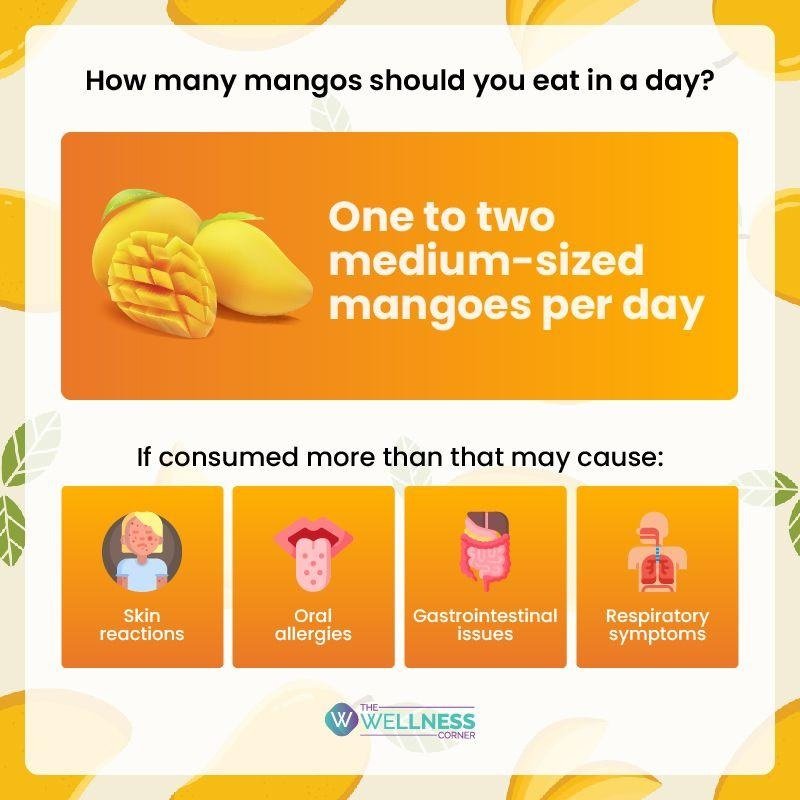
What Happens If You Eat Too Much Mango?
Although mangoes are healthy, excessive consumption can lead to some side effects.
Possible Side Effects
1. Increased Blood Sugar
Mango contains natural sugar. Eating too much mango may increase blood sugar levels, especially for people with diabetes.
2. Weight Gain
Overeating mangoes regularly can increase calorie intake and may contribute to weight gain.

3. Digestive Problems
Too much mango may cause stomach discomfort, bloating, or diarrhea in some people.
4. Allergic Reactions
Some individuals may experience allergies such as itching, irritation, or swelling after eating mangoes.
How Much Mango Can You Eat Daily?
For most healthy adults, eating one medium-sized mango per day is generally considered safe and healthy.
People with diabetes or weight management concerns should consume mangoes in moderation and consult a healthcare professional if necessary.

Best Time to Eat Mango
The best time to eat mango is:
-
During breakfast
-
As a mid-morning snack
-
In the afternoon
Avoid eating large quantities of mango late at night.

Healthy Ways to Include Mango in Your Diet
You can enjoy mango in different ways, such as:
-
Fresh mango slices
-
Mango juice
-
Mango smoothie
-
Fruit salads
-
Mango with yogurt
-
Desserts and ice creams
Mango is a delicious and nutritious fruit that offers many health benefits when eaten in moderation. Daily consumption can improve immunity, digestion, skin health, and energy levels.
However, overeating mangoes may lead to increased blood sugar, digestive issues, and weight gain. The key is balance and portion control.
Enjoy mangoes as part of a healthy diet and make the most of this tasty tropical fruit.
What's Your Reaction?
 Like
0
Like
0
 Dislike
0
Dislike
0
 Love
0
Love
0
 Funny
0
Funny
0
 Wow
0
Wow
0
 Sad
0
Sad
0
 Angry
0
Angry
0

I'm Nikhil CV. Welcome to my blog! I’m passionate about sharing interesting and useful content related to technology, lifestyle, entertainment, thoughts, gadgets, automobiles, and trending topics. Through this platform, I aim to provide informative, creative, and engaging articles that readers can enjoy and learn from. Thank you for visiting and being a part of this journey. Stay connected for more updates, stories, and exciting content!














Comments (0)